Figured Foundations
S$720 per learner · 6 session(s)
A connected programme in judgement, communication and everyday independence. Materials included. In preparation.
See dates & next steps ↗In preparationThink clearly. Work with others. Take ownership. Figured Foundations connects these skills through practical challenges that become more demanding as learners practise.
Register interest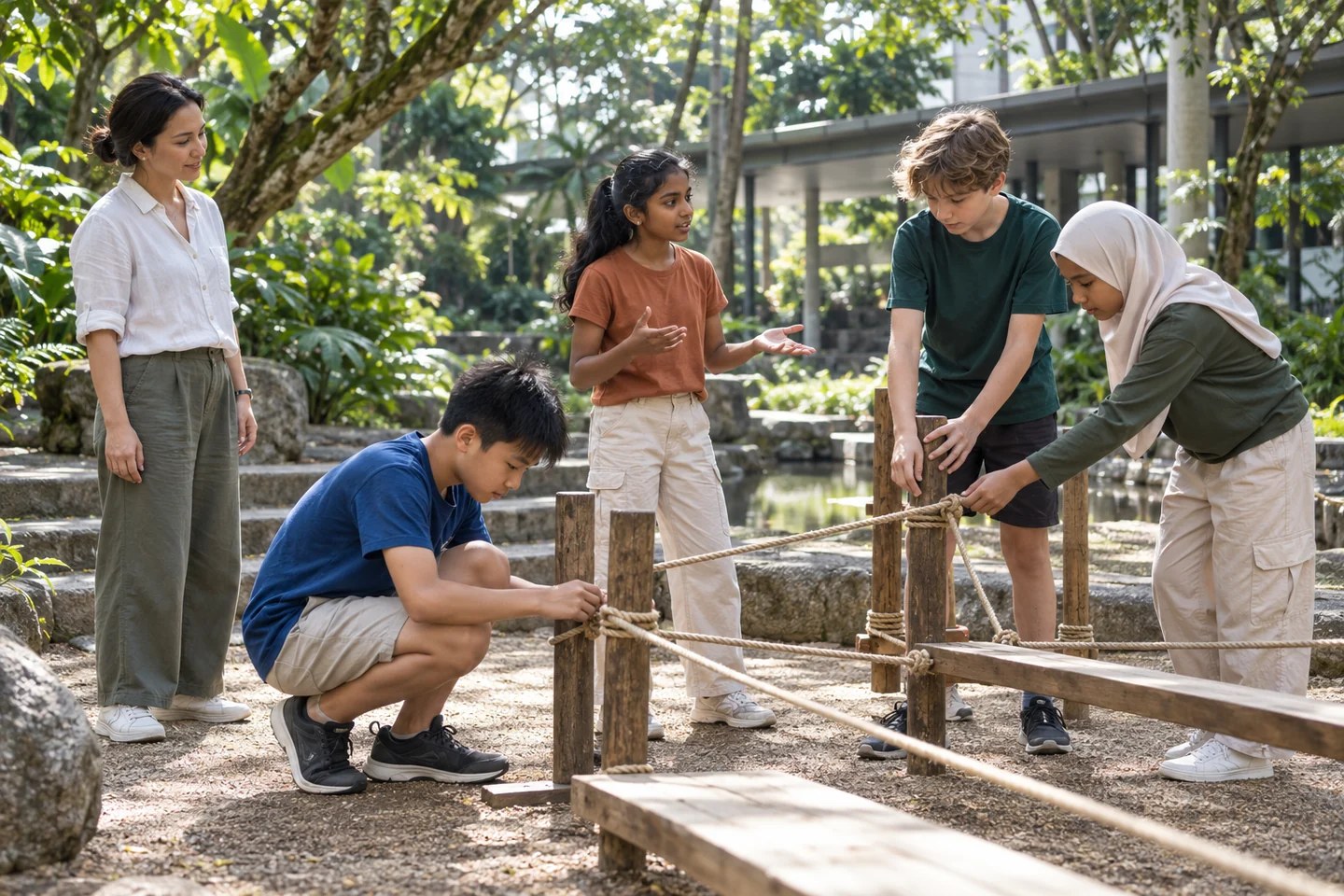
Proposed initial format. Curriculum review, rehearsal, facilitator, suitability, dates, support and fees are confirmed before delivery. School adaptations are separately scoped.
A child may know the right answer and still find it hard to explain a need, weigh a choice or follow through. This programme gives everyday capabilities a place to be practised together.
Compare options, check a claim, notice a constraint and explain a reason. Money and prepared AI examples make judgement concrete.
Ask, listen, express a view, share decisions and work through ordinary disagreement. Different ways of contributing are part of the design.
Make a manageable plan, agree responsibilities, ask for help when needed and adapt after a setback. Greater independence includes knowing where support is useful.
All three appear throughout the sequence. Each new challenge asks learners to use familiar skills with a different constraint and appropriate support.
From finding the words to speak up today, to making the choices that shape tomorrow.
Our vision is an education that grows with your child: a stronger sense of self, a wider world to navigate, and more of life to take on.
A stronger sense of self
Recognise what matters to them, express a need and find their place with other people.
Ask for help. Speak up. Hear another view.
A wider world of choices
Weigh options, question what they see and make choices they can explain—in person and online.
Check an AI answer. Set a boundary. Choose wisely.
More responsibility of their own
Bring people, time and resources together. Follow through on a commitment and adapt when life changes.
Manage a budget. Work through a setback. Make a plan happen.
A future they help shape
Connect their interests and strengths with the wider world of study, work and contribution.
Explore possibilities. Try meaningful work. Decide a next step.
Thinking clearly, working with others and taking ownership deepen together. Learners revisit these capabilities in more demanding situations, at a pace suited to their readiness.
The core life-skills programme · Six connected sessions · In preparation
A curriculum vision for ages 6–18. Foundations is initially designed for ages 9–12; later age pathways, practical independence and future-direction programmes are planned. Children can enter at different points and revisit skills as they grow.
Three chapters build the sequence: find your voice, make a plan work, and handle the unexpected. Thinking, relationships and responsibility keep returning, with guided attempts, feedback and revision in every session.
Try a short group challenge, notice where support helps and choose one personal practice goal. Start a learning record with an actual attempt.
Return to a shared plan with different priorities. Practise a clear request, a useful question and checking what another person meant.
Compare a budget, time limits and prepared information cards. Check a plausible AI claim and agree a reason for the choice.
Agree roles, resources and check-ins. Respond to a surprise change, ask for appropriate help and revise a commitment.
Use a fictional difference of opinion to practise a boundary, a calm response and a workable next step. Rehearse the conversation again after feedback.
Use the three capabilities in a fresh shared brief. Try a small prototype activity, revise it and choose a manageable practice at home or school.
The intended learning record makes the process visible: a first attempt, decisions, feedback and a revision.
Keep a planning sheet, choice-and-reason notes, a shared-responsibility map and a revised response to a challenge.
Describe a useful strategy, the support used and one next practice. There is room for a drawing, written reflection or supported conversation.
A concise account of the work and one realistic opportunity at home. Session observations and reported everyday use are recorded separately.
These are intended outputs. Completing six sessions does not establish lasting confidence or independence in every setting.
The core programme gives the school a connected starting point. Focused projects and later age pathways add depth as the learning develops.
A shared starting point in thinking, relationships and responsibility. Proposed initial six-session small group, in preparation.
The Business Challenge explores enterprise and money through a guided simulation. Other life, digital and community briefs require their own development and agreed scope.
Explore the business labOlder-age experiences in practical independence, money, digital judgement and future direction form part of the curriculum vision. Availability is established programme by programme.
Explore the curriculum visionShare the learner age band, setting and the everyday capability you would like to develop. Dates and places are confirmed after preparation and agreement.