Encounter
Meet a recognisable challenge with a real choice.
A practical challenge gives a capability somewhere to be used. Modelling, feedback and another attempt help learners work out what to do next.
Explore our programmes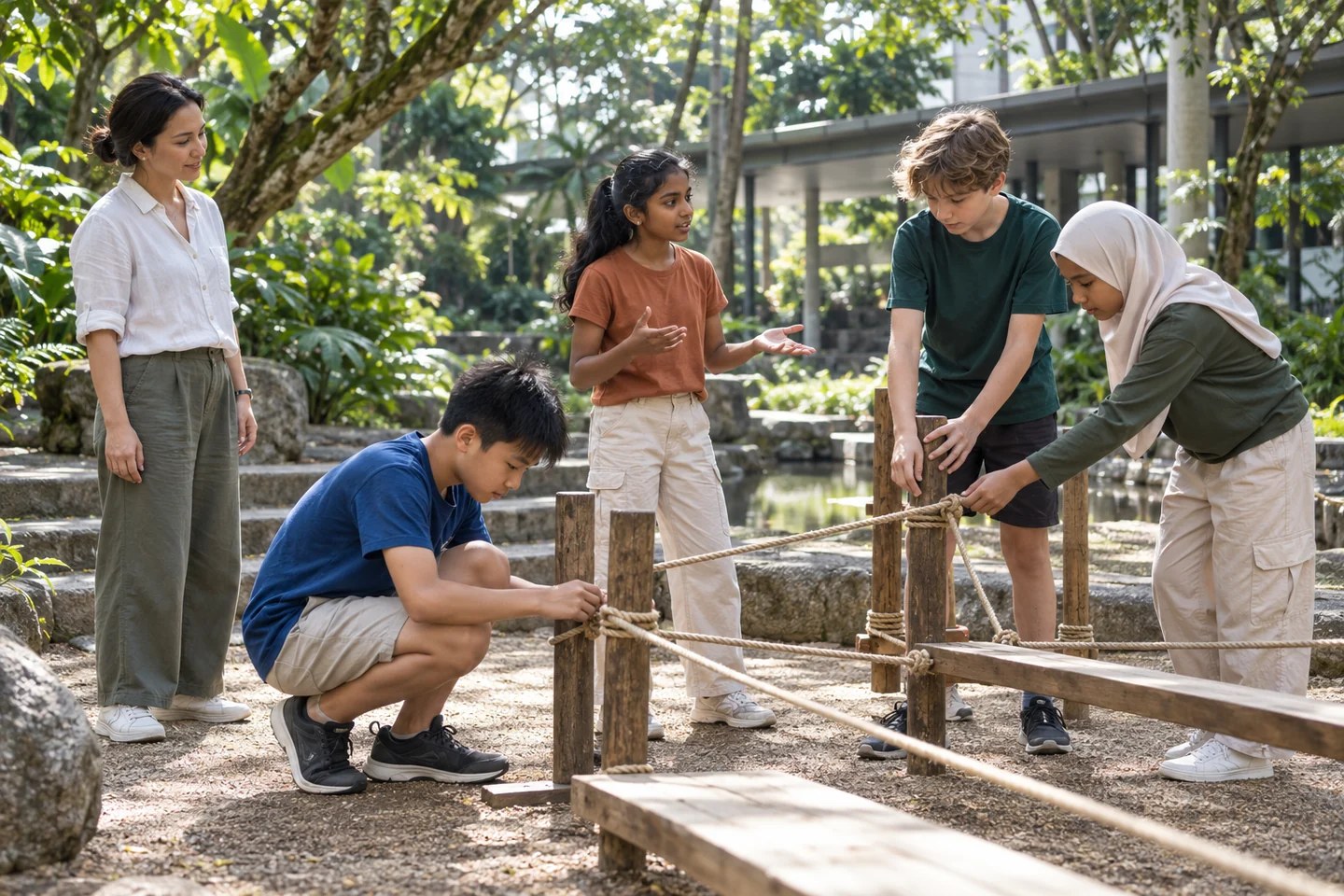
Many of the things that shape a life are learned through experience: how to listen, handle uncertainty, work with different people and choose a useful next action.
Experience alone does not always make the lesson clear. A thoughtful educator can create a worthwhile challenge, offer a useful observation and make room for another attempt.
That is the foundation of Figured. Practical learning, with structure and purpose, alongside formal schooling.
Meet a recognisable challenge with a real choice.
Make an attempt and see what happens.
Explore what helped and what another person experienced.
Use specific feedback and try a different approach.
Choose a small way to use the learning in everyday life.
A learner offers a plan. A listener asks about a constraint the plan has missed. The learner revises one decision and tries the explanation again.
Did the learner hear the question, explain a reason or change a decision? Note whether a prompt, model or planning card helped.
Agree a recognisable situation at home or school where the action could be useful. A supported practice attempt and everyday use remain different observations.
Read about learning transferFigured brings psychology, practical experience and purposeful learning design together. We give human and everyday capabilities a deliberate place alongside academic education.
Young people learn through recognisable challenges: finding their voice, working with others, making a decision and taking responsibility. The aim is practice they can use in school, at home and in the world beyond.
Age-appropriate activities, thoughtful facilitation and clear learning goals connect each experience to the learner’s stage of life.
The purpose behind Figured →Children are not smaller executives. Activities, language and expectations are developed around the learner.
Thinking time, written contributions and supported practice belong in the learning experience.
Clear behaviours, examples of practice and honest limits to what an observation can tell us.
Prepared materials, facilitator development and, over time, assessed programme authorisation and curriculum licensing.