Core life-skills programme
Figured
Foundations
Think clearly. Work with others. Take ownership. Practise all three through connected real-life challenges.
INITIAL AGES 9–12 · 6 × 90 MINUTESExplore ↗
IN PREPARATION · REGISTER INTERESTBegin with Figured Foundations, the core programme in preparation. Explore individual learning, focused applied labs and learning for the adults supporting young people.
Compare the programmes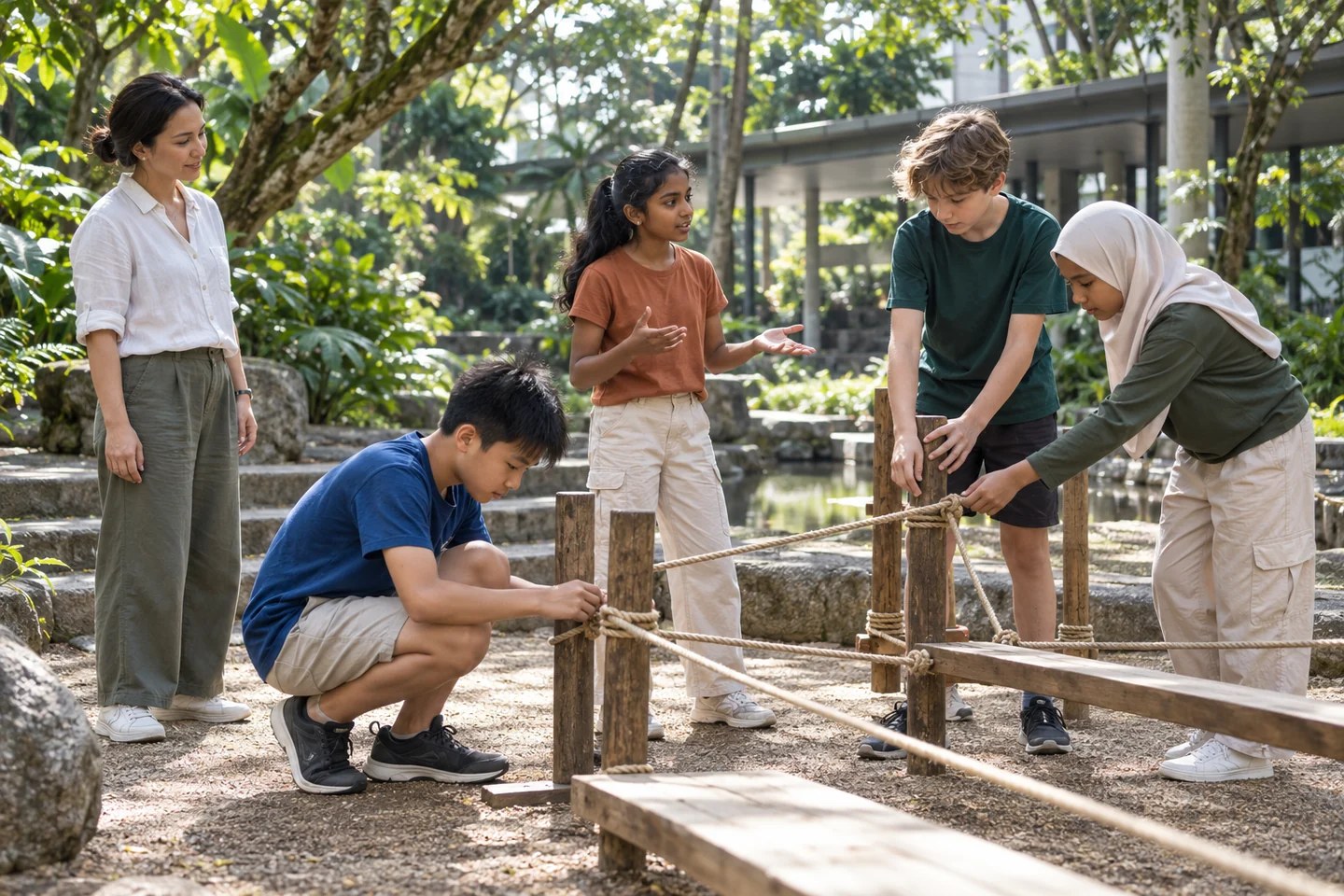
Foundations connects the essential skills. Applied labs explore a particular setting; parent and educator programmes support the learning around it.
By arrangement: enquire about fit and dates. In preparation: discuss interest and the proposed scope; a session is confirmed only after preparation and agreement.
Think clearly. Work with others. Take ownership. Practise all three through connected real-life challenges.
Create an offer. Set a price. Negotiate. Handle a surprise. Improve the plan.
One learner. A clear goal. Personal guidance through a meaningful challenge.
Explain a view. Work through disagreement. Take responsibility together.
Work through real choices about learning, checking answers and family expectations.
Choose one everyday responsibility. Agree the support. Practise handing it over.
Design a worthwhile challenge. Notice the thinking. Help the next attempt.
Help them think for themselves, work with others and take more ownership. Explore individual sessions, group learning and hosted family workshops.
The same essential capabilities.
Different challenges as young people grow.
Find the words for feelings and needs. Make friends, cooperate and take small steps towards independence.
Joining a game, asking for help and finding a fair way to take turns.
Explain choices, plan a manageable project, work with others and follow through.
Explain an idea, listen to another view and agree a shared plan.
Planned: navigate influence, digital life and disagreement; organise useful work with greater responsibility.
Respond to peer pressure or test an idea for a small venture.
Planned: money, work, relationships and direction through practical briefs and increasingly independent choices.
Plan a personal budget, navigate a first workplace or set a boundary.
A curriculum vision for ages 6–18. Initial student design focuses on ages 9–12. Figured Foundations is in preparation; other age pathways remain planned.
Age ranges guide programme design. Suitability also depends on the learner and setting.
Different settings. One principle:
capabilities need somewhere to be used.



Begin with the core capabilities. Apply them in optional themed labs. Our longer-term vision adds returning groups, consistent educators and increasingly independent work as learners grow.
Programme examples, delivery formats and how to begin.