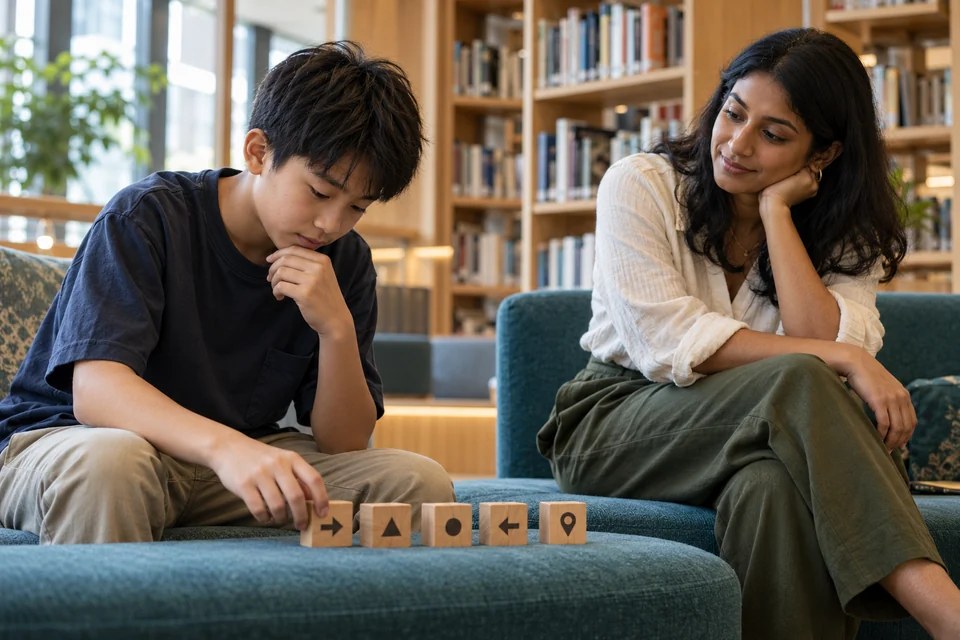
Start with one everyday situation and one action a child can practise. Notice the attempt, the support needed and what to try next—not whether the child has become “confident” in general.
Which life skills should a 9–12-year-old practise?
Useful starting points include explaining an idea, listening to another view, handling an ordinary disagreement, planning a task and deciding when to ask for help. These are learning directions, not a checklist every child must meet at the same age.
Choose a situation that matters to the child: contributing to a group project, joining a conversation, organising what they need for an activity or working through a changed plan. A specific situation makes the next step easier to understand.
Four small ways to practise at home
- Explain a choice. Let your child suggest a weekend activity. Ask for one reason and one practical detail. Offer your own view, then invite them to refine the plan.
- Listen before responding. Take turns describing a preference. Before giving a different view, each person says what they understood. Check the understanding rather than rewarding agreement.
- Plan a manageable task. Let your child list what they need for a familiar activity, choose the order and identify where help might be useful. Keep adult responsibility for safety and permissions.
- Rehearse a difficult sentence. Practise “Can I join?”, “I see it differently because…” or “Could you explain that again?” Use a fictional situation and let the child choose their own wording.
What does progress look like?
Describe an action: “You asked what they meant before answering,” rather than assigning a personality label. Ask what felt useful and what they would change. A child might manage a task with an adult prompt before trying it more independently.
One successful practice is not proof that a skill will transfer to every setting. Notice examples across ordinary situations, make room for setbacks and adjust the challenge. Confidence need not mean being the loudest or most outgoing person in the room.
When choosing a programme
Ask what the child will actually do, how the activities fit their age, who facilitates and how feedback reaches home. Look for a clear explanation of programme limits and participation needs. Educational life-skills learning is not a substitute for assessment or treatment when those are needed.
At Figured, initial student formats focus on ages 9–12. Explore individual learning or The Business Challenge, then discuss suitability, preparation and delivery arrangements. Other age pathways remain planned.
About this guide
This guide explains Figured’s educational perspective and offers practical starting points, not a developmental assessment or a claim of measured programme outcomes. Individual needs and school requirements vary. For a question or correction, contact the Figured team.