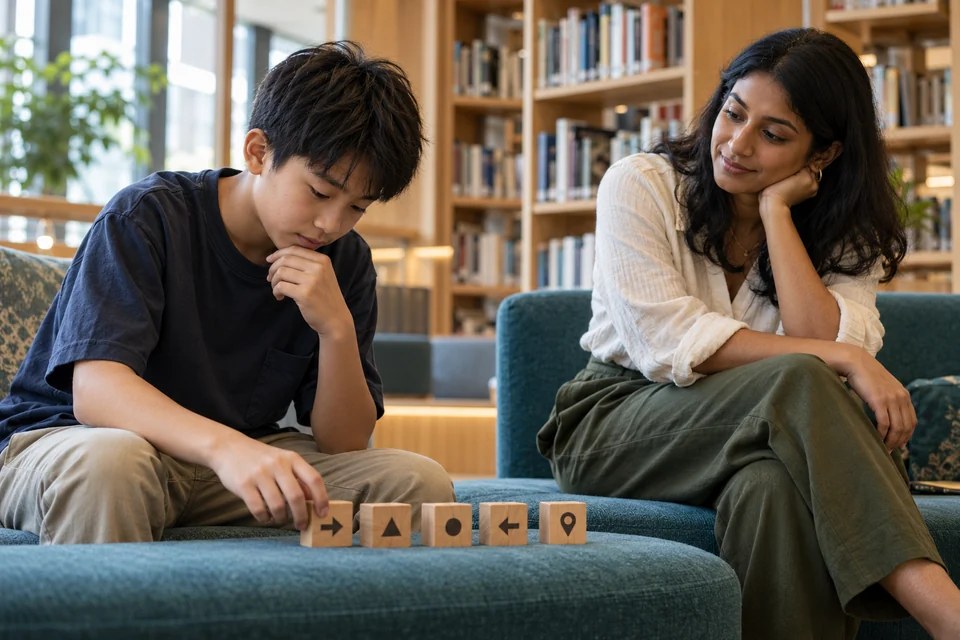
Treat readiness as an expanding ability to understand a situation, make a considered choice, work with others and seek support. Academic and practical learning can strengthen one another.
The future will not arrive as a worksheet
There are situations in adult life where knowledge is necessary and the correct next action is still uncertain. A colleague has a different priority. A purchase offers a trade-off between cost and convenience. A friend needs honesty delivered with care. A plan that looked sensible yesterday no longer fits.
Young people meet smaller versions of these situations already. They choose how to enter a group, decide whether a source is trustworthy, manage a shared task and respond when something goes wrong. Education for life begins in those present experiences, rather than waiting for adulthood.
Calling this work “beyond academics” should widen the conversation, not diminish academic learning. Reading carefully, reasoning with numbers and understanding the world are part of making sound decisions. Human capabilities give that knowledge somewhere to go.
The useful question is how the different parts of education connect, and where a learner needs a more deliberate opportunity to practise.
A broader view already exists
The OECD Learning Compass describes an aspirational education framework that includes agency, well-being, knowledge, skills, attitudes and values. It offers a way to discuss educational aims; it is not evidence that a particular programme achieves them.1
Singapore’s Ministry of Education also places social-emotional and emerging 21st Century Competencies within its broader educational framework. Communication, collaboration and thinking are already part of that ambition. An external partner should understand a school’s provision before proposing additions.2
The opportunity for Figured is to contribute a clear, practical form of learning within this wider landscape. That means agreeing a useful role with schools and families, rather than claiming that education has ignored everything that matters.
Four questions make readiness more concrete
Can I understand what is happening? A learner notices the task, the people involved and the information they do or do not have. They can ask a question that improves the picture.
Can I make a considered choice? They identify an option, offer a reason and recognise a relevant consequence. They can also change their mind when new information matters.
Can I work with other people? They explain an idea, listen, make room for a contribution and address an ordinary difference. They know that working together involves more than dividing up the easy parts.
Can I take a useful next step? They begin, organise a manageable action, seek support or revise a plan. Responsibility includes knowing when a situation needs an adult.
These are Figured’s discussion questions, not a validated readiness scale. They make a broad aspiration easier to turn into a learning goal without claiming to capture everything that matters about a child.
The capability can stay familiar while the demands change
Harvard’s executive-function activities guide describes age-appropriate opportunities for practice across childhood and adolescence. The relevant principle is developmental fit: a worthwhile task for one stage may be too simple, too complex or differently supported at another.3
A younger learner might explain what they need to join a game. An older learner might plan a shared event, handle a budget or discuss a responsibility at a first workplace. Both involve making meaning clear, but the knowledge, consequences and social demands differ.
Age bands can guide programme design without becoming rigid judgements about every learner. Language, experience, disability, interests and the setting all affect what participation requires.
This is why a connected curriculum needs progression in the situations learners encounter, not simply a longer list of impressive capability words.
Readiness should leave room to be young
A life-skills curriculum can become another pressure system if every conversation is scored and every activity must demonstrate leadership. Young people also need play, curiosity, friendship and time without a performance target.
Choose a small number of meaningful goals for a programme, then leave space for learners to surprise you. A child may discover that they enjoy helping a group plan, asking an unexpected question or making a useful object. That discovery can matter even when it was not the most visible aim of the session.
Be careful with predictions. A neat portfolio at twelve cannot tell us how a person will navigate all the choices of adulthood. It can show examples of learning, effort, support and reflection at a particular point.
The standard should be educationally useful evidence, not an impossible claim that a child has become future-proof.
A deliberate place for practice
Figured’s vision connects communication, emotional understanding, relationships, leadership, judgement, money, enterprise and practical independence. The breadth is a curriculum direction, rather than a claim that every pathway is available today.
Figured Foundations is the proposed core life-skills programme, initially designed for ages 9–12. Further age stages are planned. Individual learning and focused applied labs have their own scope and readiness while the larger curriculum develops.
For a school, the first question might be where learners need more supported practice within existing student development. For a family, it might be one recurring situation that a young person would like to handle differently.
Being ready for life is an unfinished project at any age. An education worthy of that ambition helps learners recognise what they can do, what they need to understand and whom they can turn to as the next situation arrives.
Sources & further reading
- Education frameworkThe OECD Learning Compass 2030
Organisation for Economic Co-operation and Development · Framework
An aspirational framework for agency, well-being and competencies; not an intervention evaluation.
- Curriculum frameworkPhysical Education Syllabus: Primary, Secondary and Pre-University — section 1.3
Ministry of Education, Singapore · 2024
Desired Outcomes of Education and 21st Century Competencies; cited as local context, not endorsement of Figured.
- Practice guidanceActivities Guide: Enhancing and Practicing Executive Function Skills with Children from Infancy to Adolescence
Center on the Developing Child at Harvard University · 2014
Public guide overview describing age-appropriate opportunities for practice.
About this piece
A Figured perspective informed by the sources listed above. The practical examples and planning tools are editorial proposals; they are not reports of programme outcomes. Read how we publish or send a question or correction.